
In many parts of the world, the relationship between people and the land around them has always been tended with care — wildflowers encouraged along field edges, bees welcomed as neighbors, and the rhythms of the seasons honored in every planting. Heritage Park draws on that same tradition. This spring, we sowed a native prairie mix across the park grounds, returning the soil to something closer to what it once was, and welcoming back the creatures that depend on it.
Prairie restorations like this one take time. In the first year, the roots grow deep and quietly; the flowers follow. By the third or fourth year, the meadow finds its stride — a shifting, living tapestry that feeds pollinators, shelters birds, and filters the rain into the earth below. We invite you to watch it grow, season by season, and to feel at home in it.
Bloom Calendar
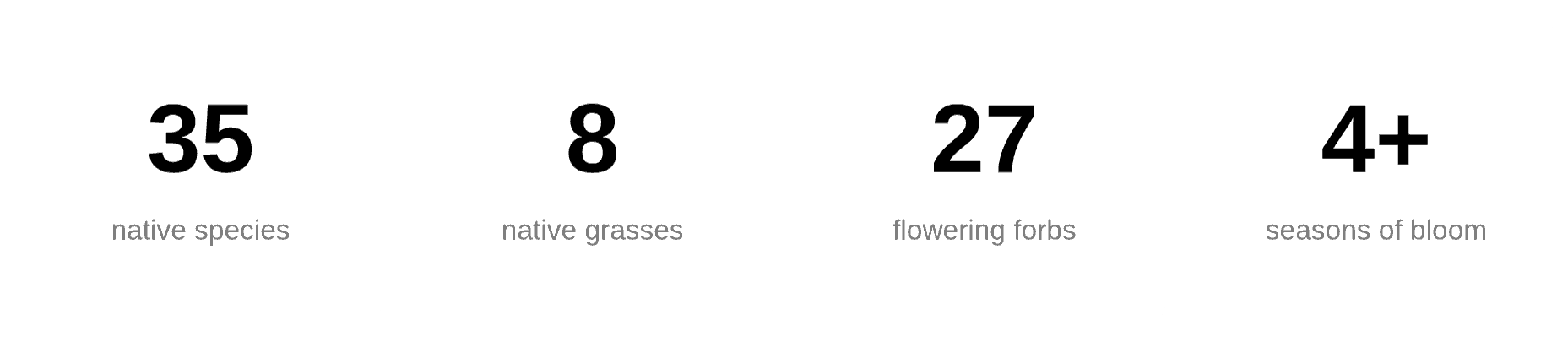
The planting — a Premium Pollinator Mix of 35 native grasses and wildflowers — was chosen to bloom in succession from early summer through late autumn. Stands of Little Bluestem and Virginia Wild Rye form the structural backbone, their seed heads catching the late light as the season turns. Among them, Common Milkweed opens for the monarchs, Wild Bergamot hums with bumblebees, Purple Prairie Clover attracts native bees of a dozen species, and Great Blue Lobelia draws hummingbirds to its deep violet spires. Black-eyed Susan and Long-headed Coneflower carry the color well into autumn, long after other blooms have faded.
Prairie restorations like this one take time. In the first year, the roots grow deep and quietly; the flowers follow. By the third or fourth year, the meadow finds its stride — a shifting, living tapestry that feeds pollinators, shelters birds, and filters the rain into the earth below. We invite you to watch it grow, season by season, and to feel at home in it.